Red bugs
A tiny yellow-bodied copepod with a red dot that lives exclusively on Acropora. Infested colonies stop extending polyps, lose colour and stop growing, and it moves through every Acropora in the tank because it is spread on frags long before anyone notices it.
Make sure that's what it is
You are looking for specks roughly the size of a grain of salt, moving, concentrated at the base of branches and in the shaded interior of a colony. Take a frag out under a bright light or a loupe — they are visible to the naked eye once you know the size, but essentially invisible in the tank at normal viewing distance. Only Acropora is affected; if it is on a montipora or an LPS, this is not it.
What it looks like
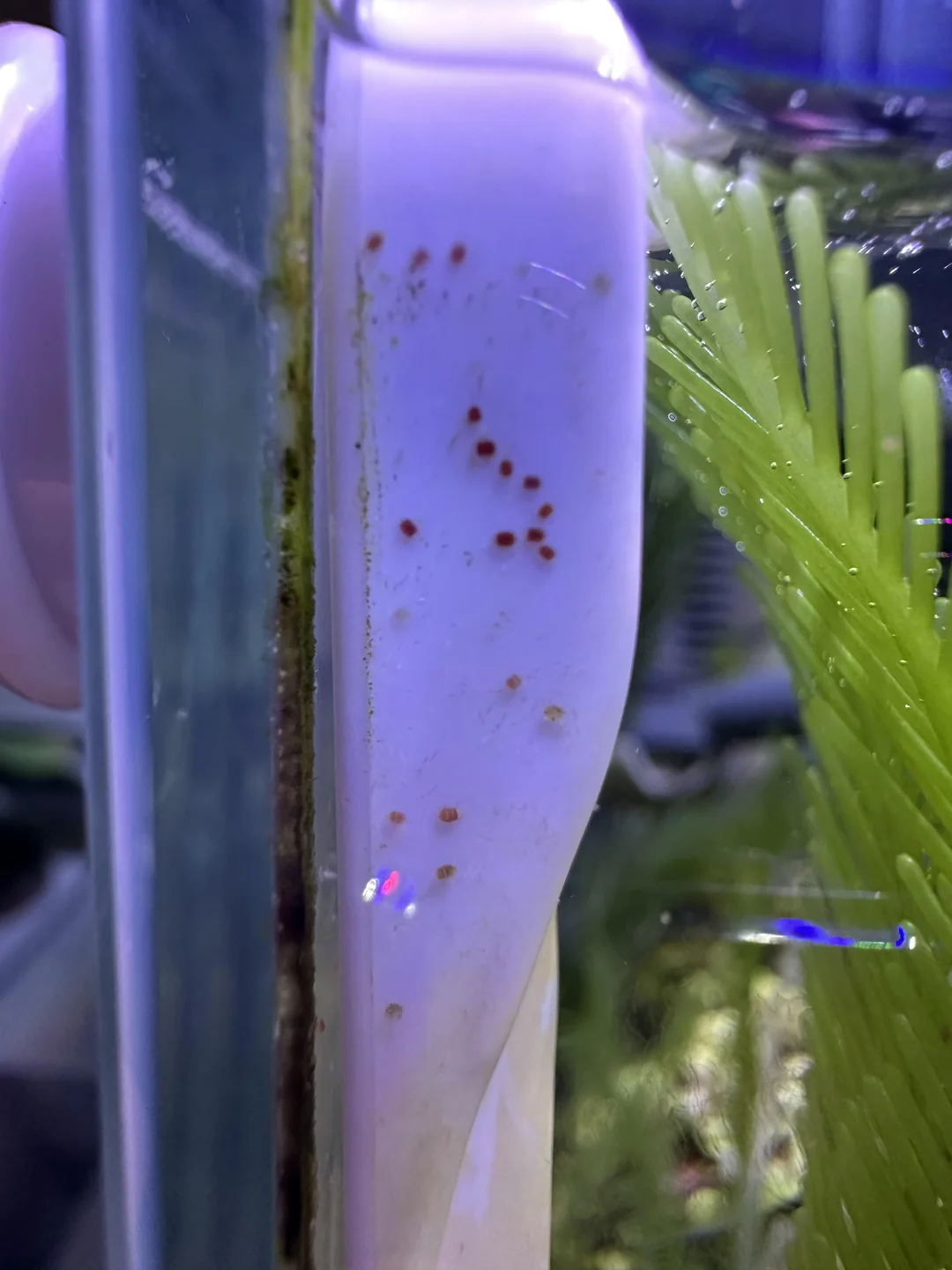
Reefer_Madness
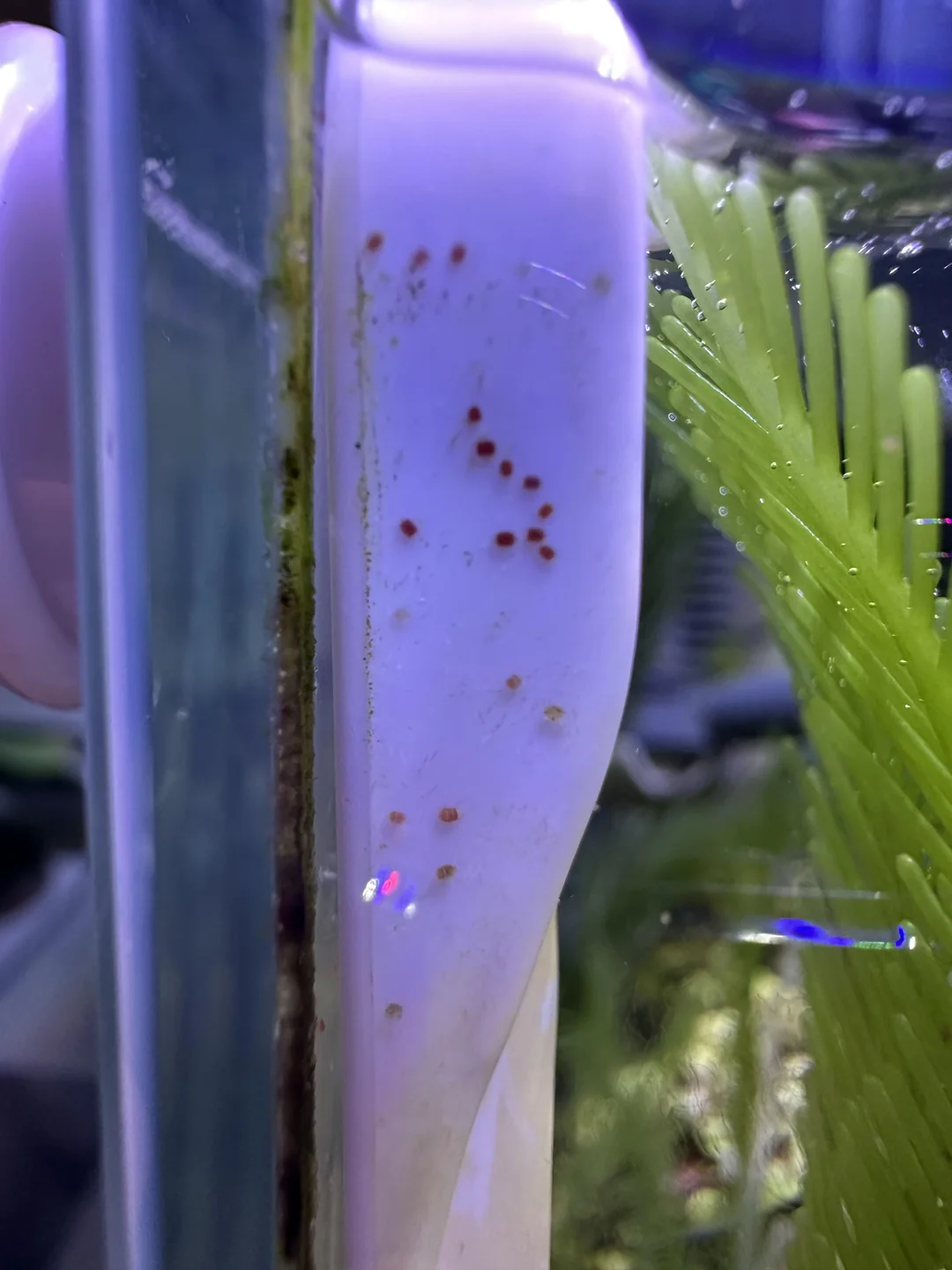
Reefer_Madness
Getting rid of it
In the order we'd try them. Every method cites where it comes from, and where the reason a treatment works isn't actually established, it says so.
Milbemycin oxime — and why no product is linked
ChemicalWhy it works
Milbemycin oxime is a macrocyclic lactone that disrupts the copepod's nervous system. It works here because of a tolerance gap rather than any selectivity for the pest: Acropora come through the exposure intact and Tegastes does not. The same gap explains the danger — every other crustacean in the tank shares the target biology, so the treatment does not distinguish between the red bugs and your shrimp, crabs and pod population. Repeat doses are required because the drug does not reach eggs, so juveniles emerge after the first pass.
What to do
Dosed to a treatment volume with the corals exposed for a period of hours, then a full water change, repeated at weekly intervals to catch the emerging generation. This is a quarantine-tub procedure for anyone who is not prepared to lose the tank's crustaceans.
Source: Treatment of Acropora Red Bugs (Tegastes acroporanus) (Reefs.com)
Keeping it out
Every incoming Acropora, without exception. This does not arrive any other way.